Thursday, 6 June 2019

First-timer's Guide to Investing in Singapore

This guide will cover the basic fundamentals about investing in Singapore for the average Singaporean. It includes the basic and popular forms of investment here which is the Singapore Savings Bond and the Stock Market, and give a good foundation as to how the investment instrument works. It will not include recommendations on what to invest in nor an in-depth analysis of the market. This is a purely layman's guide for the first-time investor.


1.       Singapore Savings Bond (SSB)
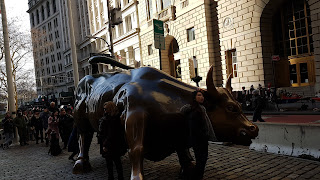

The Singapore Savings Bond is a type of government bond. A government bond is a way in which a government is able to raise cash quickly to be used for government related projects or investments. In a way, when you buy a government bond, you are essentially loaning your money to the government at an interest stipulated which is determined by the treasury issuing the bond. 
The Singapore government issues the Singapore Savings Bond (SSB) every month with differing interest rates depending on the conditions of the economy. SSBs form a better way to earn money compared to just saving in the bank. If you save in the bank, the interest rate is probably around 0.05%. That means when you save $1 000 in your bank, the bank pays you back just 50 cents every year.
But when you purchase SSBs, you will accrue higher interests. For example, the Bonds that you can buy in June 2019 has an interest rate of 1.93%. That means, when you put in $1 000 to buy the bonds, the government will pay you back an additional $19.30 every year. The interest also increases the longer you do not sell the bond back to the government. If you keep for 5 years for example, the interest increases to 2.09%.
The amazing thing about SSBs is that it is very liquid in the sense that you can get your money back anytime you want, you just have to write in some paper work. Hence, it is about the same thing as just saving your money in the bank. There is also almost no risk involved because the only risk that you lose your money is if the Singapore government defaults on the bond repayment for some reason. As the Singapore government is relatively stable with a healthy reserve, the risk would be relatively low compared to less stable government bonds elsewhere.
Buying Bonds compared to saving in the bank:
Year
If you save in Bank
If you buy Bond
1
$1000.50
$1019.30
2
$1001
$1038.60
3
$1001.50
$1057.90
4
$1002
$1078.00
5
$1002.50
$1098.90
6
$1003
$1120.40
7
$1003.50
$1143.10

To start buying SSBs, you will first have to create a Central Depository (CDP) Account and have a local bank account (DBS/POSB, OCBC or UOB) linked to your CDP account. The steps to do so can be easily followed online. Link: http://www.sgs.gov.sg/savingsbonds/Your-SSB/How-to-buy.aspx 
The minimum capital required to buy the bond is $500 and you can purchase in multiples of $500 but for each transaction (to buy or redeem), there is a standard fee of $2.


2.       Stock Market
If you think that the interest rate for SSBs is too low and you want to try a different investment instrument, then you can also look into the SGX or Singapore's stock market. When you invest in the stock market, there are higher risks involved but there are also more opportunities to earn more from your savings.


The Stock Market is a way for companies to raise a lot of capital or money for their own business needs. These companies offer stakes or shares of their company in return for your money hence in this agreement you get to 'own' part of the company. The company can then use your money for needs such as to buy more assets like properties or factory equipment or for research and development.
There are two ways you are able to earn money in the Stock Market. One: Dividends. Two: Share price.
Dividends are like interests. Companies reward people who invest in their company, or they could share part of their profits with their investors. They do that by paying dividends back to the people who invest in their company. For example: DBS bank pays 4.95% dividends to investors that invest in their company in 2018. That means if I own $1 000 worth of DBS shares, DBS reward me with $49.50 for the year 2018. Usually, the Dividend rates are greater than the interest rates from the Singapore Savings Bonds. Compare DBS Dividend rate of 4.95% to SSB interest rate of 1.93%.
This dividend rates depends on the companies and the type of companies issuing the shares. Some companies don’t pay Dividends at all while some pays low Dividends like 1% but some companies can pay up to 10% Dividends. It is your responsibility to research why companies fixed their Dividends rate as such because high dividends does not normally translate to higher returns as you will also have to take note of the Share Price of the shares that you bought too.
Share price is the price of the stock itself. When you buy stocks, you can buy according to the market value at the time you buy the stock. For example, the DBS share price as of 7 June 2019 is $24.15 for 1 share. This price will rise and fall as long as the market is open. If the market that the company is involved in and the company itself is doing financially well, the price can increase but vice versa, the opposite can happen to. If the price go up after you buy the stock, then you can sell and earn money straight away. However, do note that you will also need to pay a certain fee to your stock broker each time you buy or sell the stock. Stock brokers are the person or company that helps you buy and sell on the stock market and is a must for anyone interested in investing in the Singapore stock market.
Once you sell your share, you cannot earn their Dividends any longer.
There are many different types of companies that list their stocks or shares on the Stock Market. For example, there are Real Estate Investment Trusts (REITs), oil companies, retail companies, banks and many more, but they all work the same: Share Prices and Dividends. When the general economy goes bad, it does not necessarily mean that the market in which your company that you invested in will also see a downtrend. You will have to understand the market of the stocks in which you are buying in order and the potential news or situation in the world that could affect the share prices or dividends of the stocks.

To start buying shares in the SGX, you will have to own a Central Depository (CDP) account and accrue the services of a stock broker. The stock broker can be any company or persons that have the legal authority to deal in the Stock Market and they will help you to purchase the stocks that you want for a stipulated fee. After engaging a broker, you will have to open a brokerage account in which you will be able to put in the capital to start investing in the stock market. The minimum amount you can invest depends on the shares that you are investing in but in the SGX, you are only allowed to invest in Lots of 100 shares. Hence, if you intend to purchase 1 lot of DBS shares (Code: d05) which is $24.15/ share as of 7/6/2019, you will need to invest a minimum of $2 415 or have that amount in your brokerage account.

Hence, I have explained the fundamentals of the more common and popular investment instruments here in Singapore. I hope that it will be beneficial to all who reads them. Do follow my blog posts for more guides that you may be interested in and have a great time investing!

Wednesday, 22 May 2019

Hidden Jewels in Moscow: Jewish Museum and Tolerance Centre


Hidden Jewels in Moscow: Jewish Museum and Tolerance Centre
Location: улица Образцова 11, стр.1, лит. А, Moscow, Russia

Cost: 
200 roubles (For full-time university students, ISIC card holders, school children, parents with many children and retirees)
Free (For children below the age of 7, disabled persons, war veterans, military servicemen, orphans)
400 roubles (For everyone else)
SGD1 ~ 47 roubles

Jewish Museum and Tolerance Centre
The museum is said to be the largest Jewish museum in the world, costing about US$50 million to build. It encompasses a huge area divided chronologically into thematic exhibitions. Thus, by following a map provided in English or Russian one is able to follow the history of the Jews from the creation of Mankind to the Jewish lives in Soviet Russia. Following this trail enables one to understand the point of view or perspective of the Jews towards their own culture as well as the reasons behind their dealings with the world and the mistreatment they received from being part of this culture. The museum is a very state-of-the art museum with a plethora of interactive and creative exhibits. You will also be able to learn a great deal about this often misunderstood and rather mysterious culture. Indeed, this museum is a very much underrated 'hidden' jewel for the traveller with the time!
Experience
For very much the same reason for not visiting the other Hidden Jewels in this Blog Series, the Jewish Museum and Tolerance Centre is not the primary reason one would go to Moscow. However, if one did have the time and is perhaps in need of a unique and worthwhile experience, the Jewish Museum is one place that would not disappoint for spending a whole 2 hours in.
Gulag History Museum Closure
I came here in the summer of 2018. To be honest, this museum was not the museum I had planned to visit for that day; I had planned to visit the Gulag History Museum.  Thus, after class had ended around 2.30pm, I headed back to my dormitory near Prospect Mira to put away my books and stuff and then took a long trip eastward to the Gulag History Museum. Unfortunately, that museum was apparently closed - and closed for quite a while too! -and it was only when I talked to a security guard in the building that I found out it was closed. I found it strange that there was no notice of the museum’s closure made available online but, in any case, my plan for the afternoon had been derailed.
As I sat and pondered as to what I should do next, I quickly looked at my list of places to visit and checked which is the nearest place I could go to because some places of attractions would close early at around 8 or 9pm and at that time, it was already around 4pm. It turns out, the Jewish Museum is the nearest place I could go, only a 20 minutes bus ride further eastwards from where I was.
Journey to the Jewish Museum
Thus, I took a trolley bus, ‘7’, which took me about 20 minutes where I dropped off a short 5 mins walk away from the Jewish Museum. When I got off the trolley bus, I found myself surrounded by buildings which looked like factory warehouses with several shops littered around. As I got nearer to the museum, I also notice that the neighbourhood is kind of like a Jewish neighbourhood as you start to see people in Jewish yamada caps and certain shops also displayed Hebrew words and sold Jewish cultural goods. About a 5 minutes walk later, I turned a corner and came to this huge complex which looked like a refurbished high-end factory with the Russian word for Jewish Museum and Tolerance Centre prominently displayed on the façade of the building (Do try to remember how these Russian words looks like, as it will greatly help you in identifying and locating the museum!).
I entered the compound and walked into this sort of like a mini park with a shelter in it, I think it was a café or it could be an outdoor performance area. As it was during the World Cup, a huge projector screen had been propped up and I could see about 4-5 people seated there, presumably waiting for a match that was starting later in that evening. I walked past it, past a carpark and entered the building.
The Museum
Instantly, I was bedazzled by the vast interior. The museum has a very high ceiling, thus creating a very open breathable space. The place too is very huge, perhaps the size of a football field, and from my first impression of the displays that were near me, I knew that this place has a lot of things to offer that would keep me entertained for hours. At the entrance, there was a security check where I handed over my bag and a metal detector ran through my belongings. After the check, I walked towards the ticket counter across the entrance where I could purchase my ticket there. The man attending the counter could speak good English thus I had no trouble showing my ISIC card which entitled me a discounted price and he also gave me a map to tour the exhibits. According to the map, which had clear numbers written on them, I had to follow the numbers representing the different thematic exhibit and this would provide a clear flow to my museum experience.
Each exhibit is unique and different from the next one and the amazing thing is that each exhibit is interactive in their own unique ways. In one of the exhibit, I could take part in a Jewish dinner ceremony, where I moved objects around the dining table while being seated and this triggered some motion sensors that activated a video clip or audio clip explaining some of the Jewish customs related to dining. In another exhibit, I could enter a small replica of a synagogue and flip through a big digital Torah to uncover the history of the early Jewish people. In another, I could digitally dress up as a blacksmith or a rabbi and have my photo taken, which I could later then purchase at the museum gift shop at the end. In others, I could walk into the homes of prisoners and Jewish homes and have a look around a convincing mock-up to understand the lives of this group of people. Technology was greatly embedded in each of the exhibits and this gave an interesting and fun take to the traditional history museums. Another welcoming treat I find in this museum was the availability of English translations for almost all the exhibits, which is rarely the case in the other museums I have visited in Russia.
What sets this Jewish Museum apart from other Jewish Museums elsewhere are the exhibits that told about the history of the Soviet Union as well as the lives and treatments towards the Jewish people in Soviet Russia. It seems that while the Jewish people are active participants of Soviet history, they were also treated unfavourably during certain periods of time that resulted in some earlier diasporas from Russia for example.
Worth it Experience: 4-D ride
The exhibit and experience which I thought made the ticket itself worth was the 4-D ride I got to take located very early on in the museum map tour. The ‘exhibit’ is a small round domed theatre located around the middle of the museum where one is able to enter during the given showtimes. When it is showtime, I gave my ticket to an usher who scanned my ticket and gave me a pair of 3D glasses and then I walked into the dark theatre room for the show to begin. The chairs could move like a theme park ride and as it is a 4D effects show, air pressure machines and water sprays sprayed at me corresponding to the clip I was watching. The experience went for about 10-15 minutes I think, and it was about the creation of the world to an earlier part of Jewish history. I remember there was the story of Moses and I think Noah too because there were scenes of locusts where I was puffed with pressurized air and then sprayed with water while being accompanied by huge rocking movements. I just remember thinking to myself how incredible the ride is and how worth-it it the ticket price feels like, just for this ride because I have been to similar rides in Canada for example but it costs a lot more and did not come with a museum pass!
Time
There was also another theatre I could have entered and experienced in one of the later exhibits but unfortunately, I did not have the time. Due to my earlier change of plan, I came quite late and in fact, I was the last visitor to the museum and the museum near to the closing time was virtually empty. In the 4D theatre, there was only one other female student visitor in there with me for example and in almost all the exhibits, I was the only person looking through them. The place is simply enormous and if you really want to try everything out, I would recommend allocating 2 hours to visiting this museum. I spent about 1.5 hours, but I missed the last 4-5 exhibits as a result of coming here late.

Some of my favorite exhibit that I managed to experience was an exhibit about the Great Patriotic War (otherwise referred to as World War II to other parts of the World) where it gave me a background of the war efforts of the Soviets in repelling the German invasion of their homeland. The Soviets of course played a crucial and often understated role in ensuring Hitler did not reign supreme over Europe. In this exhibit, you can view a couple of interviews of war veterans that talked about the conditions of the war, the lack of preparation of the Soviet army, the nationalistic feeling of defending one's homeland and also an interesting insight of how Soviet Jews were able to conduct some of their Jewish customs amid the chaos of the war.
Museum Shop
A museum employee checked up on me and informed me that the museum was closing. Hence, I made my way back towards the entrance, slightly forlorn that I missed quite a bit of exhibits that looked just as amazing as the ones I have visited has been. On my way out, I passed the museum shop which was still open and tended by one female staff at the counter. Wanting to have a remembrance sake from my visit here, I bought a passport holder of Yuri Gagarin, the first man in space, a ‘Super Jew’ badge (which costs a whooping 400 roubles) and 2 pictures of me, one dressed as a Rabbi and another dressed as a Blacksmith. Thanking the lady, I left the museum feeling grateful for the opportunity to have been here.

Thursday, 9 May 2019

Hidden Jewels in Moscow: State Darwin Museum


Hidden Gems in Moscow: State Darwin Museum

Location: Ulitsa Vavilova, 57, Moskva, Russia, 11729
Cost: 
Free (For children below the age of 7)
400 roubles (For everyone else)
SGD1 ~ 47 roubles

Additional costs for certain Interactive Exhibits such as “Walking Through Evolution” and “Know Yourself, Know the World”.
Payment can be done at the museum itself.


State Darwin Museum
The museum is purported to be a natural history museum explaining the works of Charles Darwin on evolution and it consists of two buildings; the Main Building and the Exhibition Halls Building.
The Main Building comprise of the ticket counter near the entrance, a cloakroom and museum store in the basement and some ticket-covered and non-ticket covered exhibitions. To get to the Exhibition Halls building, where the bulk of the exhibitions are, you will have to head down to the basement and find for a passageway that connects both buildings. The Exhibition Hall building is designed in themes, different from level to level, but with proper guidance, you can eke out a flow to the museum. Everything in this building is covered by the ticket except for one exhibition in the upper levels, the museum shop and some virtual simulation rides that you can try out. A worthy note: This museum is huge!
Experience
For someone to have gone all the way to Russia, an unlikely tourist destination for many in itself, the State Darwin Museum is definitely one place not high up on a tourist's wish list of places to visit. People would rather go to the famous Kremlin or St Basil's Cathedral. But Moscow is not only about these two places. If you have the time, the State Darwin Museum is one hidden gem that you definitely do not want to miss.

I came here in the summer of 2018 on a weekend. I did not have a plan for the morning, but I had plans to catch the World Cup at the FIFA Fan Fest at Moscow State University in the evening with some friends. While researching on places to visit nearby to kill the morning, I found the State Darwin Museum, which also happens to be in the ISIC app I was heavily using for inspiration for places to visit.
Hence, I took the Moscow subway train which I was getting familiar with from Prospekt Mira where my dormitory was located to Akademishskaya Station on the M6 Brown line which took me about an hour. After getting off, it took me awhile to get my bearings right and find the museum. The museum is about a 5-minutes walk away from the station.
The museum from the outside does not look all that impressive. It looks like a dull yellow building that did not offer much. A couple of large statues of dinosaurs outside of the museum however, gave clues on what I can find in the museum.
Buying the Tickets
As in most places in Moscow, knowing some Russian will get you a long way. The ticket line is quite long, and the entrance was pretty crowded and rowdy. Noises from an interactive exhibit nearby and people chatting about were blaring in my ears. The majority of the crowd seems to be young Russian families with their little children. When it was my turn to purchase the tickets, I quickly whipped out my ISIC card app and asked in Russian how much it costs for a ticket; ‘Skolka stoit eta bilyet?’. All the ticket prices and signs are in Russian and my Russian was not proficient enough to understand it all, but I did see the ISIC card logo so I assume there must be a discounted price. The ticket lady pointed at the 150 roubles and I gladly took out 150 roubles to pay for the ticket. In return, I got a paper pass which I then gladly pocketed.

Walking Around the Main Building
Every time I walked into an exhibition hall, there is an officer at the entrance who asks for our passes. I was only rejected once, from a very cool looking exhibit called “Know Yourself, Know the World” with the noises and flashing lights but it is because I had to buy a separate ticket. The exhibit also seemed to be primarily geared for children as there were many kids running about and making a deal of a noise in there. At first, I thought that the Main Building was the only building there is. To be fair, I was not expecting much for 3 Singapore dollars as the Moscow Kremlin had cost a lot more. In the Main Building, I visited an exhibit on the history of the museum and then a temporary exhibition on wolves which was in conjunction with the World Cup. The official mascot of the World Cup in Russia was Zabivaka, a wolf. The name itself is a combination of two Russian words that meant 'hothead' and to 'score'. In that exhibition, there were real stuffed wolves and interesting facts about wolves and its symbol in various cultures.
Throughout my visit, I relied on the izi.Travel App, a really useful app that I was introduced to by Russians when I visited the Banksy Exhibition near the Moscow River. It is free to download, and I used it in most museums because the cost of hiring an English language tour guide is relatively quite expensive and I am still not proficient enough in Russian to fully enrich myself in the exhibits. Each museum display usually has a number in which I can refer to in the App that will then provide me with an audio guide of what each display is about. Only some displays are not to be found on this app.
However, after spending a good 20 minutes, I realise that the izi.Travel App indicates a lot more exhibits than the ones in this building. So I went down to the basement where I spotted the museum shop and cloakroom and then I saw some arrows pointing down a linkway. The linkway looked really drab and ordinary, I initially thought it led to the toilet or something, but instead, it led me to an entirely wonderful world.
The (main) Exhibition Building
When I entered the building, I was instantly mesmerized. The first floor has really huge impressive statues of animals reaching almost to the ceiling, and these statues were supposedly to scale! The animal statues are statues of extinct animals such as the Giant Anteater.  There is a winding staircase to the upper levels and also a couple of lifts in the corner. As I mentioned before, from the outside, the museum may look like some plain old building but from the interior everything seemed modern and new and really impressive. 
In the next 1.5 hours, I rushed to explore the many exhibits that there are in this building. The building is very huge and is probably the size of a football field but they have several floors. The museum does not only have exhibits on evolution, with displays upon displays of dinosaur bones or dinosaur replicas, they also have an exhibition on the development of evolutionary studies and an enormous taxidermal collection, so enormous and grand that there are definitely more than 1 000 preserved animals in the exhibits, many of which were purposely poised in impressive curated landscaped environments of the animals natural habitat. So I could find displays of snarling wolves, moose in a fight, a bear on its two legs and all kinds of rare animals. There were simply so many in this taxidermal collection. I eventually skipped some as I was running late; I only had plans to visit for 2 hours.
Non-Ticket Covered Exhibit
I found myself in kind of a clearing on one of the upper levels in the main exhibition building. The last two floors are relatively less crowded and there is a winding staircase I could take that took me to the top of the museum tower where I could see Moscow in the distance. As one walks up these steps, there are small rooms with smaller exhibitions that I could enter, some of which was a bit weird to my taste and I am not sure what they were about as it was not reflected in the izi.Travel App. Some were about stones while some seems to be about art.
However, on one of the upper floors there was this cool metallic UFO like exhibit at one corner. A lady was seated at the entrance so I approached her and asked if I could enter. She said I have to buy a separate ticket for 40 roubles, about 1 Singapore dollar. As I was curious, I paid for the ticket and entered the UFO-like exhibit.
Inside is like a maze that lights up as I walk through, think 'Walking with Dinosaurs'. The exhibit, it turns out, is the “Walking Through Evolution” exhibit which takes me back to the dinosaur’s emergence and extinction in history. As I traverse the maze littered with tropical deco and dinosaur replicas, I would come across rooms in which I must answer a question on the evolution of certain species of dinosaurs, hence I would actually learn something as I move from one display to another. For a dollar, it was definitely worth going through the exhibit and I was a bit surprise that there was only a mother and son in there with me at the time I went!
I also wanted to check out the virtual simulation rides in the museum but unfortunately, I did not have the time; my friend was calling me to come over. I quickly went to the museum shop at the Exhibition Building and bought myself some badges before reluctantly leaving the museum for the Metro station.
Overall Verdict
This is one museum, if you have the time and perhaps covered the ordinary must-travel places in Moscow, in which you definitely must visit. It is certainly great in value especially if you have already applied for an ISIC card. For a less touted about place, this is definitely a hidden gem worth an entire half day visit.
Total Spending for the Visit: 190 roubles ~ SGD 4.04

Keywords: Places to Visit, Moscow, Russia, Museums

Saturday, 5 January 2019

NTU Course Review: LMS Year 3 Semester 1

NTU Course Review
Nanyang Technological University
LMS Year 3 Student (Semester 1, Y2018)
Linguistics & Multilingual Studies GER-PE Courses: Language Change, Intercultural Communications, Making of a Civilization

Other Courses: Cultural Intelligence: How to be an Explorer of the World 
Language Change
Course name: Language Change
Course Code: HG3021
Assessment: 
      ·         Two Written Tests           -              (25% & 25%)

·         Group Presentation        -              (15%)

·         Class Participation            -              (5%)

·         One Final Essay                 -              (30%)
Course Review:
Language Change is sort of like a continuation of Francesco (Jr)’s Level 2 courses; Etymology and Cryptology. For the uninitiated, fret not, because Francesco will spend some time to go through some of the Level 2 material so that the students are able to think through the lenses of Historical Linguistics (A very important perspective for Linguists, I am sure!).

Reading-wise, it is not too heavy probably about 1-2 research papers per week. Expect to learn more about Historical Linguistics, with more examples than what is found in the Level 2 courses. By the end of the course, you should be well versed with how the Italian town of Borgomale got its name or how the legend of Lamoling gave rise to placenames in the island of Alor. Do take note of the examples the professor went through in class as you can use them as essay examples during the 2 quizzes you have to take. Also, the Final Essay is very important as it could very well be the differentiator between your classmates and you, so spend some ample time to write the essay.

Intercultural Comms
Course name: Intercultural Communication
Course Code: HG2021
Assessment:

·         Two Essays         -                              (30% & 30%)

·         Group Presentation        -              (30%)

·         Class participation            -              (10%)
Course Review:
This was quite an interesting course for me, in particular because I have a growing interest in Intercultural Communication ever since returning from Summer exchange in Russia where I had many interactions with people from all around the world, giving me a new lease of curiosity regarding intercultural communication. That said, this course was loaded with knowledge, especially from a Linguistics perspective, on this subject.

A good thing about this course is the rather interactive way of learning. Stephanie, who is well-travelled, would fill her lessons up with her interesting life stories on intercultural communication and her wisdom regarding the subject. Sometimes, they even go beyond the reading material and I had a fascinating time trying to peer into the lenses of my prof. The lessons are also punctuated with discussion time regarding our own opinion or experiences on the subject matter, thus it was really quite fun. To do well, you do have to put great effort in your essays and be punctual in your submission. Also, try to work well with your group members and put up a good presentation as for this sem, other groups were really great. In addition to just a presentation, the group will also have to come up with a one page write-up on their presentation.

Making of a Civilization
Course name: The Making of Civilizations
Course Code: HH1007
Assessment:

·         2 Group Presentations (+ Class Participation)       -              (15%)

·         1 Archaeological Dig                                                        -              (5%)

·         Two Book Reviews                                                          -              (30%)

·         One Final Exam                                                                 -              (50%)
Course Review:
To be honest, this was a really really interesting module to take. And I even got to take it as a Linguistics Ger-Pe (Which has its Pros and Cons. Pros: Clear LMS Ger-Pe. Cons: You can’t SU). As you can see from the Assessments, there are a lot of things to do, and they all constitute small percentages. In fact, there was supposed to have been 3 Group Presentations before time stopped such lofty targets.

Nevertheless, for someone interested in knowing what a Historian or Archaeologist actually does or how history is recreated, this is the module to take. Each lecture is loaded with history and for someone like me who is very interested in History, I find every lecture very interesting. The Archaeological Dig was the icing on the cake, you get to go to Fort Canning Hill to a real excavation site and try your hands at excavating the site. Prof Goh will explain all you need to know about excavating, including the site’s history and how artifacts can tell us about history. Some students even found artifacts from the 1400s during our time excavating. That said, the Final Exam carries the most percentage in the course. It will make or break your result, so do study hard for it and listen to all the clues on how to answer them by the prof weeks before the exam. It will help.

Arabic Level 1
Course name:    Arabic Level 1
Course Code:     LA9001
Assessment:

·         Two Tests

·         Oral Presentation

·         Oral

·         Class Participation
Course Review:
I love learning new languages. I started off with Russian and over the years, have gained at least minimal speaking fluency. I went on to start learning Spanish and now Arabic. To the non-Muslim students, I have to warn that you will be at a huge disadvantage in Arabic Lvl 1. Almost everyone else already know how to read the Arabic alphabets prior to this class so you will have to do extra work to keep up. That said, the prof understands this and the module is really quite manageable in the end as the level is quite basic and the pace not fast. I have an exchange friend from Korea who did quite well. You will not be able to speak Arabic yet by the end of the course, but perhaps it is a starting point to learn the language.

As with good language classes, there is a lot of hands-on/ practical sessions so expect to move around class quite often. In the end, assessment-wise, I am actually quite disappointed with my end result especially because I had scored almost full marks for all my tests. Nevertheless, I understand the high bell curve for this class, so if you want to score well, my advise is to really not take this course. :x

Cultural Intelligence: How to be an Explorer of the World
Course name: Cultural Intelligence: How to be an Explorer of the World
Course Code: BU8641
Assessment:

·         Two Written Tests                           -              (20%)

·         Facebook Posts                                 -              (10%)

·         1 CQ Journals, 1 Final Reflection -              (10%, 20%, 10%)

·         Group Project                                    -              (30%)
Course Review:
I would say HANDS-DOWN, this is the best course NTU students should take. It is perhaps the chilliest (In the sense it is not all memorising, books & tests), most practical and useful course one can ever take in NTU. The course essentially aims to teach one how to interact and communicate with people outside of their culture. As mentioned before, I had an interest in intercultural communication and while my other course was, I felt, more theoretical, this course was 100% practical.

1/3 of the class is allocated to exchange students and my group of 6 had 2 exchange students in them, an Indonesian and a Swiss. The class is mostly hands-on, in the sense that in the seminars, we learn the theories about practical Intercultural Communication (like legit the things that are useful to holistically develop one to be great intercultural communicators). But the things learnt was really to test it out when working with our intercultural friends when we work on our project as well as when we go out and bond with them. Also, did I say that 2 of the classes are GELs, Group Experiential Learning, where you and your group pick two dates to go out and just spend time with your groupmates. It sure was a really fun and useful module, one that increases my confidence when interacting with someone from a different culture.

This course review is my view and take on the modules I took up this Semester which I hope may be of use to you who may have plans to take up these modules. It is entirely subjective and the course structure itself may change over the next coming years or semester! Thanks for reading! Спасибо Болшое!

Friday, 4 January 2019

A Singaporean Road to World Cup Russia 2018 Part III

This article is about my journey and virgin experience of watching a World Cup in a foreign country. Helming from Singapore, this is how my experience went.

The atmosphere was deafening. The chatter of thousands could be heard resonating through the stadium ground and they were in all kinds of languages; Spanish, English, Russian and a plethora of unidentifiable languages. They were excited, jumpy and full of anticipation. Beers were passed, and hotdogs handed out. On the pitch, when the two large Panama and England flags unfurled and the players emerged from their dressing room, the roar raised a few decibels.
I, too, couldn't stay down in my seat. In my mind was, THIS IS THE WORLD CUP. I excitedly chatted up with the woman sitting next to me, a Russian as it turns out, from Nizhny Novgorod itself, the place where I was watching the World Cup live. Russians turned out in droves, partly due to the cheaper tickets but to also revel in the football. I knew several Russians who do not watch football on any other day, but during the World Cup season, everyone does.

When the national anthems of the countries played the respective fans sang to their hearts. In particular, due to the numerical superiority of the Panama fans, I could feel the plastic seats resonate when the Panama national anthem played out; a reflection of the pride of the people of Panama whose country have long been unrepresented in the World Cup. The end of the national anthem was accompanied with more clapping and cheering and the occasional sounds of plastic horns.

Kick Off
And before long, the players went to their respective positions in anticipation of kick off. The countdown commenced with the crowd shouting with the stadium announcer; 5... 4... 3... 2... 1... PEEEEP!

The cheer rang out and reactively I let out a primal shout and started clapping wildly. The emotions were running wild. Everyone was expressing their feelings on the match as blatantly as possible; when a foul was committed, the crowd whined, murmured and some booed. When a player was clearly adjudged to be feigning a foul, the crowd murmured. I too couldn't help but talked, sometimes to myself, "That's not a foul. Come on!" and other times to the people seated around me. The crowd, it turns out, is really impartial. Everyone was in the spirit of the game in essence. And the players duly delivered.
The score line is as it has been immortalised; 6 - 1 but it was no means a one-sided defeatist style of play from Panama. The Panama players attacked from the get-go with enthusiasm and gusto. They had their chances with their quick lightning counter attacks but at the end of the day, England's quality and excellent football tactics gave them a deserving win. At half-time, it was 5 - 0. 
After each England goal, the iconic "Football's Coming Home" song by The Three Lions played across the stadium. There was only two England fans near my seats, and they celebrated wildly after each goal, pumping their beers in the air, spilling them and hugging each other. Then they would jump around and sing to the iconic lyrics. In truth, England had a decent shot at World Cup glory in Russia in 2018, as they had a decent team and formation under Gareth Southgate plus a lot of the major contenders were eliminated early on. But, as it turns out, they were outplayed in the Semi Finals.
Half time came and a large proportions of the stadium visitors went to get a refill of their beers or buy a hotdog snack. I went out to the toilet but I also got myself an ice lemon tea and a hotdog from the counter, setting myself back by 400 roubles (about SGD$9). Buying myself a set enabled me to take home a limited edition World Cup drink cup. There were three different kinds though for different kinds of drinks; a non-alcoholic, a Budweiser and a Russian branded beer. By the end of my World Cup stay, I had collected to of them. After getting my due refreshments, a must after such an exhilarating match, I went back to my seat to enjoy the music and crowd in the stadium at halftime.

The Panama fans did not get disheartened after each goal was scored against them. They still cheered on every counter attack and possession their team had with enthusiasm and their team's perseverance and attacking philosophy prevailed in the end with the team scoring a solitary goal towards the end. That resulted in the stadium erupting. Even the England fans were congratulating the Panama fans. It turned out that it was the first Panama goal in the World Cup! History was in the making!

End
At the end, the people left the stadium with almost the same enthusiasm as when they had arrived, having seen a breathtaking and memorable match. The same official entertainers entertained; the drummers, the cheerleaders and the volunteers. I strolled past them, took photos when I had the opportunity and just soaked into the atmosphere. As I walked with the crowd, a portion of them sang out in chants and cheers. A popular one was "Ros-si-a! Ros-si-a!" After meandering with the crowd, we made our way to where Ayub was waiting,  at the place where he had dropped us off. He had watched the match on his phone (phone data being cheap here in Russia) and with large help from a translating app, we talked about it as we drove the long journey back to Moscow.


Tuesday, 28 August 2018

A Singaporean Road to World Cup Russia 2018 Part II

This article is about my journey and virgin experience of watching a World Cup in a foreign country. Helming from Singapore, this is how my experience went.

PART II: Heading to Nizhny Novgorod Stadium
The World Cup atmosphere can be felt way back in Changi Airport, Singapore on the 21st July 2018. There was a small display of football jerseys at one of the terminals and World Cup promotions could be seen everywhere we went. That day, I took an Emirates flight with my parents to Moscow with a transfer at Dubai International Airport. After checking-in our luggage, we went for our last Singaporean meal before our flight; a nasi lemak meal (coconut rice with fried chicken and anchovies) with a dollop of spicy chilli sauce and bandung (rose) drink.

Flight to Moscow
Our flight to Dubai was for 8 hours and from Dubai to Moscow’s Domodeva Airport, another 7 hours. We left Singapore at 10.30am and reached Moscow at 11.30pm (Moscow time, which is 5 hours behind Singapore). As we approached closer to Moscow, the World Cup atmosphere seemingly intensifies. The flight from Dubai was filled with World Cup fans helming from Peru, Argentina, Colombia, Egypt, Nigeria and even non-participatory countries such as Lebanon. There was a massive exchange of friendly greetings at the transit lounge back in Dubai and it served as a precursor of what to expect in Moscow itself.

Touch Down

The immigration process at Domodedovo Airport was a lengthy and tiring one. Even after landing so late in the evening, with the volume of passengers coming in, we had to queue for a quite a while. While we were queuing, officers would pick off random people and bring them to a separate holding area to be questioned. Once I got to the counter, I was asked several questions and my photo was taken. It immediately become apparent that knowing Russian will go a long way to surviving and communicating in Russia as the officer does not speak English! Thankfully, immigration went smoothly.
The baggage claim area was slightly chaotic as well. Perhaps with Changi Airport’s high standards, everywhere else may seem as such. We could not find our luggage and waited for half an hour at the baggage claim area before realising that someone else had taken our luggage and placed it at a corner together with several other luggage.

SIM Card

Afterwards, we went out and immediately tried to obtain a SIM card. The nearest booth was from Megafon, one of the largest telecom companies in Russia. It was recommended that we purchase our SIM card in Russia itself as it is really very cheap. In the end, we got a SIM card with 10GB of data for 1000 roubles or SG$20 (not really the best price, but it was the best at the airport). The process is easy enough. Just provide your passport and the money in hand and within minutes, you will have your SIM card.
Yandex Taxi
Afterwards, we used the local Yandex app, a ride-hailing app similar to Uber, in order to get a ride back to our hotel, Hotel Voyage Park. Yandex is honestly a lot better than Uber as it is a lot cheaper and for the taxi drivers they are able to check if there are traffic jam according to the route. I managed to converse a little in Russian with the cab driver and by around 1.45am, we reached our hotel for a belated sleep in.

Road Trip to Nizhny Novgorod
I will fast forward a few days to the 24th of July 2018. I failed to mention in my earlier post that my parents had decided to come to Russia with me to watch the World Cup too and we had bought earlier match tickets also at Nizhny Novgorod, the England vs Panama match. Due to the late nature of us booking the tickets, we could only get category 1 tickets at USD210 each and we could not book a free train ride to Nizhny Novgorod. In fact, it was impossible to even get a normal available train there. In the end, I suggested for us to take Yandex taxi to Nizhny Novgorod. It would cost us 10 000 roubles which is about the same price as 3 train tickets to Nizhny Novgorod. The only difference is the time it would take for us to get there, 5 hours instead of 3.
I slept most of the journey as we started our journey relatively early at 9.30am. When I was awake, I talked to my Yandex driver, Ayub. Apparently, he is from Tajikistan and had come to Moscow to take his Masters a few years ago. He also speaks Russian and German fluently. The Russian countryside was also really beautiful. Once a while, we will pass a village with beautiful wooden huts and cathedrals.

At around 2.30pm, we reached Nizhny Novgorod. The city in my opinion is rustic and laidback compared to Moscow. There are several construction projects around but overall, the city is old and quaint. We did not manage to explore the city as we headed straight to the Nizhny Novgorod stadium.
Nizhny Novgorod Stadium
Roads around the stadium has been closed. Certain vehicles with special passes are permitted through and they are given to reputable drivers or tour buses in order to shuttle people around the cordoned off area. For example, the bridge nearest to the Nizhny Novgorod Kremlin linking to the stadium was cordoned off. We dropped off a few blocks away from the stadium and walked towards it.
Finding our way is really not a problem. There were FIFA volunteers and guides every few metres who could speak sufficient amount of English. The younger generation mostly took English as a second language in school. However, due to a lack of practice, some of their English may have attrited which is why there are some communication barriers for non-Russian speakers in the streets. Some of the volunteers were dancing and when you pass them, they will high five you. A friend of mine joked that it is mandatory to return it.
The FIFA atmosphere immediately reached a new level as we got closer to the stadium. People drabbed in all kinds of flag, mostly the Panama flag, were heading towards the stadium. Music were played and there were several performances by street musicians around. Russian cheerleaders were a hit among football fans as everyone wants a picture with them. Some singing can be heard among larger groups. We went to the Decathlon outlet near the stadium and got some drinks and clothes. I even got myself a Russian scarf.

Entering the Stadium
We then made our way to the entrance nearby. At the entrance, there was a security check. Our bags and bodies were scanned, and any unwanted items were taken by the security and that included food items and drinks and flags that are political or too large. Once past security, a festival-like environment greeted us. There were FIFA souvenir shops selling World Cup goods, carnival booths with football-themed games and food and drink booths selling mainly hot dogs and beers.

At around 3.30pm, we went to our seat, which had a really good view of the pitch. Soon, the match will start, and the cheers grew louder.