Thursday, 14 June 2018

A Singaporean Road to World Cup Russia Part I

This article is about my journey and virgin experience of watching a World Cup in a foreign country. Helming from Singapore, this is how my experience went.

PART 1: Journey to World Cup 2018
My journey to the World Cup in Russia started way back in February 2018 when I received the opportunity to study in Russia during the summer for a summer exchange. I did not think twice about accepting the offer because I already had a passion for the Russian language and culture and the World Cup was actually an afterthought (incredible as it seems as I am a HUGE football fan). The World Cup in Russia for the 2018 edition takes place from 14 June to 15 July and is held in various cities across the Russian Federation.

Buying the World Cup ticket
After realising that the World Cup was during my summer exchange program, I quickly went to look up on how to purchase a World Cup ticket. As ardent a football fan as I was, I was not going to miss this opportunity and I quickly found out that one has to enter a ballot in order to be able to purchase a ticket. I already missed the first round of balloting, thus I have to enter the second round of balloting. The tricky bit was selecting a perfect date and the city to watch the match because at that point in time, I had applied to several universities, all in different cities such as Nizhny Novgorod, Moscow and St Petersburg which had different course durations. Furthermore, it was already towards the end of the (last) ballot draw thus I had to make a decision quickly.

The ticket website indicated the popularity of the matches, hence the probability of winning the ballot, and in the end, I chose a round of 16 match in Nizhny Novgorod on the 1st of July with the possibility of watching Argentina play if they won their group. The ticket price set me back by SGD$153 (USD$115) for a Category 3 ticket and I duly noted the fact that a Russian citizen only has to pay about SGD$40 for the same tickets. I am not complaining too much because after all, they are the hosts (please, Singapore or ASEAN, host a World Cup during my lifetime), and comparing this to a ticket for a WrestleMania match in Los Angeles or a ticket to watch a performance at the Bolshoi Theatre in Moscow which is priced around that figure, I think the World Cup is definitely more worth it.

Winning the ballot

It took several weeks for me to receive the exciting news in the form of an e-mail confirmation that I have won the ballot. I made sure that all my information was properly entered into the official FIFA system and read the steps I will have to take from then on.
I had to apply for a Fan ID using my Application ID which is a sort of pass which allows me to enter the stadium or travel around Russia without a hassle and also allows me two free train tickets to anywhere in Russia to watch the match.

I put off planning for the World Cup afterwards as I concentrated on my studies and on my application to the summer university (because if I don’t get in, it kind of defeats my original purpose). It turns out I will study in HSE Moscow as the university has a better ranking and summer program than the others which I have researched on. Hence, I will have to make plans to travel to Nizhny Novgorod and book an accommodation there too.

Settling my Transportation
Around the end of March, I received my Fan ID via mail which had a pass with my passport details and a rather unglam picture printed on it. It was then that I remembered I had to book a train ticket. To my horror, most of the train tickets for around the match period were already snapped up, thus in a day, I decided on the time and day of departure from Moscow to Nizhny Novgorod and back to Moscow.

The website I had to apply the train tickets from allowed me to choose the seats or bed on the train and showed the timing and duration of the train journey. This is important because different trains have different duration and schedules and thus, I had to plan accordingly. In the end, I chose an overnight train ride to and from Moscow.

For the flight ticket from Singapore to Russia, I booked them according to my summer exchange period and it costs about SGD 1700 on Etihad Airways with a transfer at Abu Dhabi International Airport. (Do note that if you are a student, you can actually book using an ISIC card or through STATravel for Singaporeans which will give you huge discounts for flight tickets!)

Settling my Accommodation
This was a particularly tricky bit because as the World Cup approaches, the price of accommodation naturally gets inflated. For example, a night in Nizhny Novgorod normally costs around SGD20/ night or less for a one room apartment but due to the World Cup, it inflates to about SGD 100/ night. I used AirBnB, aware of the risks of cancellation and such, and found the best apartment which costs surprisingly cheap at ~SGD50/ night and is near to the stadium.

Obtaining a VISA
For those who have not been to Russia, it is a point to note of the ridiculously arduous process of obtaining a VISA to step foot into Russia. Depending on the type of VISA, you will have to produce several documents and fill up several forms and submit them at the Russian VISA office or embassy in order to get your VISA. I applied for a student VISA which allows me to be in Russia for 40 days and was required to fill up an e-application form, obtain a Letter of Invitation from my host university, obtain a HIV test certificate (which requires to be stamped AND signed) and produce my standard immigration documents.

The Letter of Invitation is the tricky bit in the process of obtaining a student VISA and this also applies to those who wishes to apply for a Tourist or Personal VISA. You have to get invited by someone in Russia in order to enter the country. That means someone in Russia has to obtain your particulars and apply for an invitation at the Foreign Office in Russia to create an official Letter of Invitation for you.
For those who are using a travel agency, they usually have an office or someone in Russia who helps them to do this but if you are going on your own, you either have to ask the hotel or the owner of your place of accommodation for help in making the Invitation or know someone in Russia to help you get this Invitation. Thankfully, most of the hotels do provide this service and you have to ask them on how to go about doing this.

After someone applied for an Invitation for you, it takes around 20 days for your request to be processed and for you to obtain your Letter of Invitation which will be sent to your consulate or faxed to you depending on your preference.

That said, do start your application early and work on obtaining the documents months before you are due to travel, just in case there is a snag in the application process.

Ready for Russia
With all administration things settled, I now only need to pack my bags, create a travel itinerary and brush up on my Russian (which is not very necessary, but I think this opportunity would be an awesome chance to practice my Russian!). With great anticipation and my body burning with World Cup fever, I await the date as my date with Lionel Messi approaches.

Total Expenditure:
World Cup Tickets
SGD$ 153
Return Flight Tickets
SGD$ 1700
Accommodation
SGD$ 106
Russian Visa
SGD$ 168
HIV test
SGD$ 26
Total Costs so far: SGD$ 2163

Wednesday, 13 June 2018

Wisdom Tooth Guide

(This post was previously from https://aboutwanariff.blogspot.com/2016/03/wisdom-tooth-guide.html )

This guide would be useful if:
1) You are an NSF (better if you are from SCDF)
2) Want to know what to do to get your wisdom tooth plucked out (for free, if you are an NSF)
3) Want to know the procedures for the surgery
4) Want to know how it feels
5) Want to know tips for before and after the surgery

Wisdom Tooth
Wisdom tooth is that annoying tooth that grows at the very end after your last visible molar tooth at all four sides of your mouth. They are usually inside your gums, but over time (usually when you are 20 years and above) there will be instances where they could grow out of your gums at an angle or move inwards to constrain the spaces of your remaining teeth. The former could result in infection or tooth decay as it would be near impossible to brush the tooth at an angle using a typical toothbrush. The later could cause your other tooth to move out of shape resulting in crooked tooth and even cause pain or discomfort. Some people are born with no wisdom tooth, others with all four. For me, I had three. Either way, the treatment normally prescribed is to remove them.
What have I gotten into?

For NSFs
For a National Service Fulltime (NSF; which could also mean Non-Sufficient Fund or Not So Fast, both very apt), an option by the Ministry was given to them to be able to remove their wisdom tooth for free during their NS period. First step is to consult a person in-charge of your unit's welfare. The person in charge would have at the very least another name for you to ask more questions about the procedures. As an SCDF NSF posted to a fire station as my unit, I was referred to a medical admin officer at my station. All fire station would have an admin officer to settle administration, and they would have the knowledge of the procedures to pluck your wisdom tooth for free. If you are posted to a different unit, the advise given might be different, thus you have to consult your relevant officers in charge. For me, the advice given was first, to get a referral from a Polyclinic which would schedule an appointment for me to a clinic which could perform the surgery for free under the NS agreement. Going/ calling the clinics directly would only result in them asking you to go to a Polyclinic first to get a referral. Any Polyclinic would do. I went to Pasir Ris Polyclinic. I went and consulted a doctor and asked for a referral to pluck my wisdom tooth. After the consultation, I was led to another room, the Polyclinic's call centre, where a nurse called the clinics to schedule an appointment for me. Some suggested clinics are the National Dental Centre and Changi Hospital. An appointment for dental consultation was fixed and I was given a referral letter.

Pre-Procedure/ Consultation
When the day of appointment came, I went to the National Dental Centre at Outram and was led to level 2 for registration. After registration, those below 21 are required to bring their parent/s-, my number was called up and I went to consult a Dentist. The Dentist checked and prodded my teeth in a cubicle with a dentist chair and some minimal dental equipment in it. Then I was led to an X Ray room where an x ray of my face was taken. I went back to the dentist and she advised me on the surgery required regarding my wisdom tooth. I had 2 high risk impacted wisdom tooth and 1 other wisdom tooth which would most likely not be impacted my entire life. She told me to choose if I wish to remove all 3 or just 2. She also highlighted the risks of the surgery, namely damage to the nerves which would numb senses near the wisdom tooth area and the risk of perforation on the upper gums. (A hole from mouth to nose.) The risks are small, about 1%, but nevertheless they are still risks. She also asked if I would prefer general or local anesthetic. General meaning I would go to sleep during surgery and local meaning I would be awake but they would numb the area they are operating on. In the end, I chose general aesthetics and to remove all 3 wisdom tooth at once. After the consultation, I was led out of the room and waited to schedule another appointment on another day for the surgery itself. A nurse with a calendar book looked through all appointments and scheduled a date agreeable for all parties. The nurse also advised on what to bring on the day itself and told me to not eat after 12am the day before the surgery or the Dentist would postpone my surgery.

Surgery

On 1 March, I went to NDC to level 3 where the surgery room is. After registering, I was led to a bed and was told to change my shirt to a plain blue shirt reminiscent of a bathrobe or kimono and an adjustable blue pants with slippers. A nurse took my blood pressure and asked me questions about my medical history. Afterwards, I was told to wait in my bed. I waited for hours before I was called. A very friendly and nice anaesthetic doctor told me the procedures of the surgery and if I had sneezing or coughing the previous days. Sneezing might affect the surgery and if I had them, they would postpone the surgery. I was then lead to the operating room and was told to lie on a bed under an enormous lamp. The staff was very friendly and asked me questions about my work and stuff. They inserted a 24G cannula to my left hand. Afterwards they place a mask over my face. At first I thought it was oxygen. Then, the gas smelled different. My second last breath made me really drowsy. The last thing I heard was, "You are doing really great...". Then, I blacked out. I had many dreams. Some bad, some good. But I totally did not recall the surgery. The next thing I felt was a slap from a nurse asking me to wake and I woke up suddenly, surprised.
The first thing I tried to do was to comprehend what just happened and it slowly dawned to me that I just had my surgery and I remembered the gas. The next thing I realized was that I could not feel my tongue. It was numb, and so is the sides of my mouth. The nurse calmed me down and I felt them wheeling me to my previous ward where I had waited before my surgery. I was very groggy and when I tried to sit up, my whole body was weak and it made my head spin. The peculiar thing was that my mouth did not hurt and I assumed it was due to the anaesthetic. A different nurse came to me and fed me a cup full of purple glucose  through my mouth. It had been about 14 hours since I last ate. Nurses have high patience level and I salute them. For there I was, a helpless patient barely able to open my mouth due to the numbness and I had spilt my drink and she wiped it for me. I have my gratitude to all the staff which made my surgery successful and pleasant, they are really professional. Afterwards, my dentist came to me and told me of the surgery and it's outcome and told me what to do in the next coming days and what to expect. I collected my medication and afterwards left the vicinity. As a precaution, I was told to take a cab home.

Post surgery
The pain I envisioned based on countless recounted experiences from friends who had undergone the surgery before did not arrive. What I felt was a prickly pain similar to a cut to my finger, to the sides of the operated area. There was no excruciating pain, just the prickly feeling once in a while and when I bend my head down. Swallowing the painkillers even let the pain disappear altogether. The only problem was that my mouth became swollen and hard to open for the next 4 days. The swelling was very severe, I stopped all social activities like a chalet and movie outing with colleagues and friends. The silver lining is, I had a clear picture of what I would look like if I was fat. And it was not a pretty sight. (Added motivation to keep fit) I was told to eat 5 pills 3 times daily for the next few days and since my mouth was swollen, I was advised not to eat or chew on the affected places of surgery in my mouth for at least the next few days. My mother cooked for me porridge almost everyday and bought me tubs of ice cream. I spent my days eating and watching movies or catching up on television shows I had missed. When I get bored I read books or do household chores around the house. And before long, I had recovered. I fixed another appointment about a week after the surgery to the dental centre where they check up on my teeth and remove the stitches. The removing of stitches is slightly painful, like a prick. Afterwards, I recovered a little more and my mouth is back to normal. The slight complication I had was that I felt a slight numbness to my lower right jaw. The dentist then told me to come back in a month and gave me a prescription of vitamin D for the nerves. But generally, the procedure went extremely well.

Cost
The cost of the surgery, under the NS Scheme amounted to $7 for the removal of 3 wisdom tooth. I checked the invoice for my surgery at the National Dental Centre, the cost of the surgery amounted to $3000+ but with Government subsidies (for Singaporeans/PRs) bringing the cost down to about $1200+. My private dentist quoted me $2200 for the removal of all 3 wisdom tooth.

For NSFs, I would advice them to apply to remove wisdom tooth early. If they remove 2 teeth, they are allowed to remove one at a time. Each time they remove would allow them to take 7/8 days of MC. That is, if they wish to do so. I advice them to take early because I took mine close to my ORD date (ord-oh), and almost was not able to get an appointment to remove my wisdom teeth. I would advise them to at the very least, start getting referrals at least 1 or 1 and a half month before your Ord date as it may take 1 or even 2 months until you get an appointment to remove your wisdom tooth.
I hope this guide was useful as I sure was not able to get a proper detailed guide from just Google. For those intending to get their wisdom tooth removed, do not be afraid as the way the surgery looks is less painful than it seems. A paramedic once told me a thing about pain. At that time, the paramedic was referring to inserting a needle into our hand for intravenous (IV) use and he had this advise for those who are afraid of needles. "Pain, pain a bit only what. Why need to scared? You can't die. Seriously, you cant die!" And it's true! A needle won't kill you. I have seen patients with a crushed leg or had broken their arms and I do believe their pain would be insurmountable compared to a needle poke. I will not die.
But anyway, for being less wise by 3 tooths, I sure am wiser about the subject.

Name one person you have known to have died from a needle poke

Tuesday, 5 June 2018

NTU Course Review: LMS Year 2 Semester 2


Nanyang Technological University
LMS Year 2 Student (Semester 2, Y2018)
Linguistics & Multilingual Studies GER-PE Courses: Etymology, Cryptology, Child Language

Other Courses: SG Languages, Russian Level 2
Etymology
Course name: What’s in the Name?
Course Code: HG2095
Assessment:

·         Two Written Tests           -             (25% & 25%)

·         Group Presentation         -             (5%)

·         Class Participation            -             (15%)

·         One Final Essay                 -             (30%)
Course Review:
The topic of Etymology is, in my opinion, one of the more fascinating and interesting topics in Linguistics. It is definitely useful in learning tidbits to share at a party or in a conversation. You will learn the general field of research into a word’s history and how historical and field linguists work to uncover the links and root of a word (A lot more than it seems!). Expect to learn more about Europe’s history, especially Italy & Rome, and the professor’s cat!

The readings are not heavy, about one paper a week, and the lessons are interesting if you are genuinely interested or curious in learning about word’s history. To score in this mod you have to shine in your open-ended questions in the two tests, which requires some effort in reading the slides and readings, and especially, in your final essay. (So put an effort in the essay!) 

Cryptology
Course name: A General Intro to a History of Cryptology
Course Code: HG2097
Assessment:

·         Two Written Tests           -              (25% & 25%)

·         Group Presentation        -              (5%)

·         Class participation            -              (15%)

·         One Final Essay                 -              (30%)
Course Review:

At first, I was quite sceptical as to how Cryptology had any links to Linguistics and how it can help me in improving my understanding of Linguistics. It seems kind of a niche topic and I felt like it wasn’t part of a Linguistics course at first but over the course, when we finally got to the Linguistics portion of Cryptology, it finally dawned on me that this course is providing me another perspective, and method, into Linguistic research which could be useful if I choose to pursue historical and field linguistics.
Cryptology is divided into two halves; History of Classical Cryptology and then Crypto-Linguistics. In the History portion, you will learn the basics and idea behind Cryptology (which I really needed as I had absolutely no background in it) and the important figures in the field of Cryptology. It is important to highlight that we do not go into more complex cryptosystems or focus on the mathematical portions of Cryptology, hence it is more about knowing that there are such cryptosystems and learning a bit about its background. In Crypto-Linguistics, we delve into different deciphered and undeciphered language scripts in the world such as Egyptian Hieroglyphs, cuneiform and Easter Island’s Rongo-rongo script where we learn how they were deciphered or why they still remain a mystery.
The readings are not heavy, similar to Etymology, although if you want to be more well-versed in the subject, you can read the more technical books on Cryptology on your own. Similarly, to score in this mod you have to shine in your open-ended questions in the two tests, which requires some effort in reading the slides and readings, and especially, in your final essay. (So put an effort in the essay!)
Child Language
Course name: Child Language
Course Code: HG2013
Assessment:
  • Two Written Tests           -              (20% & 20%)
  • Group Presentation        -              (20%)
  • Class Participation            -              (15%)
  • Two Essays                         -              (25%)
Course Review:
Child Language is actually about first language acquisition. The module has a well thought-off structure which moves from the earliest stages of language acquisition (in the womb) all the way to the Reading Age. As we move from one stage to the next, we are introduced with various landmark studies on language acquisition with regards to that stage. If you want to raise a kid properly and maximise on their early learning curves (yes, you competitive Singaporean parents), I would strongly recommend this module.

You will learn which methods have been scientifically researched as enabling a child to read faster or better in the short or long term and be better at language skills.

The reading is heavier than Etymology and Cryptology but still light compared to a Level 3000 course. You will have to read about one chapter of a book per week, although it is not compulsory, and the important parts of the readings are also already highlighted in the interactive lessons by the professor anyway. However, there are more interesting tidbits and research which is not covered in the module which can be found in the readings. To score well, do focus on the tests and put some effort to at least read the slides!
SG Languages
Course name:    Singapore Languages
Course Code:     HG0201
Assessment:

·         Two Online Tests              -              (30% & 30%)

·         One Final Essay                 -              (40%)
Course Review:

This course is taught to a wider audience in the HSS auditorium (This batch had over 300 students!) The course is divided into two halves, each taught by a different professor. The first half provides an overview of the linguistic landscape in Singapore such as the history of the linguistic environment, the language policies and most importantly how the current linguistic landscape comes to be (You get to learn about the origin of Singlish). The second half places emphasis on linguistic researches done in Singapore such as the language attitude of Singaporeans and Singaporeans choice of language in different social context and it covers a range of topics from Elderspeak to Emotions.

The assessment does not seem rigorous at all, which is why the course is very popular; two online MCQ tests and one final essay.  Furthermore, this mod can be used to fulfil the “Singapore mod” component for NTU student’s GER-PE.
That said, one should put in a lot of effort into the essay as the weightage is high! The online tests can be done anywhere, thus they have their pros and cons. I find the lectures to be a little long (3 hours) and notice that since attendance were not marked, some students may not even attend them. The reading too is not heavy, about two research papers per week. Overall, however, the content of the curriculum is interesting for anyone who have questions about Singapore’s language environment and wants to know what LMS students study and learn 😊.
Russian Language Level 2
Course name: Russian Language Level 2
Course Code: LR9002
Assessment:

·         Two Written Tests                           -              (10% & 40%)

·         Two Group Presentations              -              (10% & 30%)

·         Class Participation                           -              (10%)
Course Review:

Russian Level 2 is a continuation of Russian Level 1 which can be taken in NTU or on exchange. Russian Level 2 is equivalent to a A1.2 level in the CEFR classification. The Russian language, at first glance, seems like a hard language to learn with their exceptions and rules and different writing script. But, Russian is still an Indo-European language same as English and the rules are familiar if not similar, thus an English speaker should not have a problem following the course as compared to Mandarin or Arabic (imo).

One thing I really liked about the course is how the professor tries to create a warm environment in her classroom and build rapport with her students. I think she put an effort to understand her students and to cultivate an interest in the Russian culture and language. Expect added benefits in joining the Russian language community with invitations to Russian movie clubs (organised by the professor) and language events (Tete-a-tete Language Tables)!

In Russian Language Level 1 and 2, expect to be put on the spot a lot as everyone gets called up for the exercises and practices. BUT the language practice is crucial to mastering the language. Overall, it is a fun course with the assessments, though many, are manageable.

This blogpost is entirely subjective and the opinion and interpretation of the author. Do note that the course structure, assessment weightages or even course availability may change over the next semesters. I hope may be of use to you who may have plans to take up these modules. Thanks for reading! Спасибо большое!

Wednesday, 30 May 2018

Travel: The Basic Tokyo tourist Guide (Day Two)

Every Tokyo tourists have to visit these places in order to be able to proudly say they have visited and experienced Tokyo. Without further ado, here is the Day Two itinerary for the Basic Tokyo Tourist.

Basic Tokyo Tourist itinerary

Tsukiji Fish Market - Yoyogi Park - Harajuku - Tokyo Station - Imperial Palace - Yokohama/Sunshine City
0230    - (1 hour) On my Day One guide, I advised the Basic Tourist to get an early night's rest. The reason is because they will have to wake up early the next day at around 2.30am. Wash up, and pack your stuff for the day. I would have left the comforts of National Olympics Memorial Youth Centrewhen the sky is still dark and hailed a cab/ Uber to Tsukiji Fish market.


0330    - (3 hours) The reason one has to arrive at the Tsukiji Fish Market early is because only 120 people are allowed to attend the famous Tuna Auction at 5.30am and 5.50am on every Monday, Tuesday, Thursday, Friday and Saturday. Thus, people start to queue as early as 1am! Honestly, it is best to get help from a Japanese local here, for they will know ways and the time to procure a spot for the auction. You can also get some fresh seafood breakfast here.

There are plans to move the Tsukiji Market to a different location but words have it that there are underground politics which prevents the move from taking place. If the market were to move, it is wise to visit it first!

0630    - (1 hour) Exit Tsukiji Market and head back towards National Olympics Memorial Youth Centre to get some sleep, you will need energy for the whole day today.

0730    - (2 hours) Rest. (Optional)

0930    - (15 mins) Get up and head towards Yoyogi Park just to the left of the Centre. 

0945    - (45 mins) Yoyogi Park is a beautifully manicured park at the heart of Tokyo consisting of bridges, fountains, viewing platforms and Sakura (cherry blossom) trees. I came during the Autumn cherry blossom period and the park was beautiful. Take an early morning stroll and enjoy the aesthetic scenery of the park. Online guides mention that sometimes, people come here in cosplay costumes although I did not see any during my visit. It is still a beautiful and relaxing park to start off the day.
Entrance to Yoyogi Park

A bench

Too early for cherry blossoms perhaps

Aesthetic Japan

Fountains

Beautiful artificial rivers

It's a really huge park!

1030     - (15 mins) Exit the park and make your way to Harajuku in ShibuyaHarajuku is only about a 15 mins walk from Yoyogi Park and you can enjoy the morning environment of a laidback Tokyo.

10.45     - (2 hours) A live DJ from a radio station greets you at the entrance of the famous Harajuku StreetHarajuku is a must-go for cosplay enthusiasts and those who wishes to experience this quirky (in the eyes of the uninitiated) hobby. Along the streets, you will find people dressed fully or partially in various costumes derived from Japanese animes. The shopping street sells all kinds of merchandise for cosplay but it also sells gifts and souvenirs and fashionable clothes which are catered for a younger audience. Harajuku is also famous for their delicious crepes which costs around Y400-Y800 (SGD 4 - 8~). Do try them as you explore the street. near the entrance, there is also a large Daiso store, a store which specialises in selling goods at a standard low price. If you are on a tight budget to buy gifts for friends, you may want to buy them here because there are really no other cheaper places to buy souvenirs than here. 
The street of Harajuku! (At night)

It was close to closing time, thus there are a lot less people then.

An absolute must try, Harajuku crepes

An owl and cat café... not something I'd find any other day.

12.45      -  (30 mins) Head towards Tokyo Station located in the official business and government district of Tokyo. You can take the Chiyoda Line from the Meijijingu-mae Station and drop off at Nijubashi-mae Station. Head towards JP Tower.

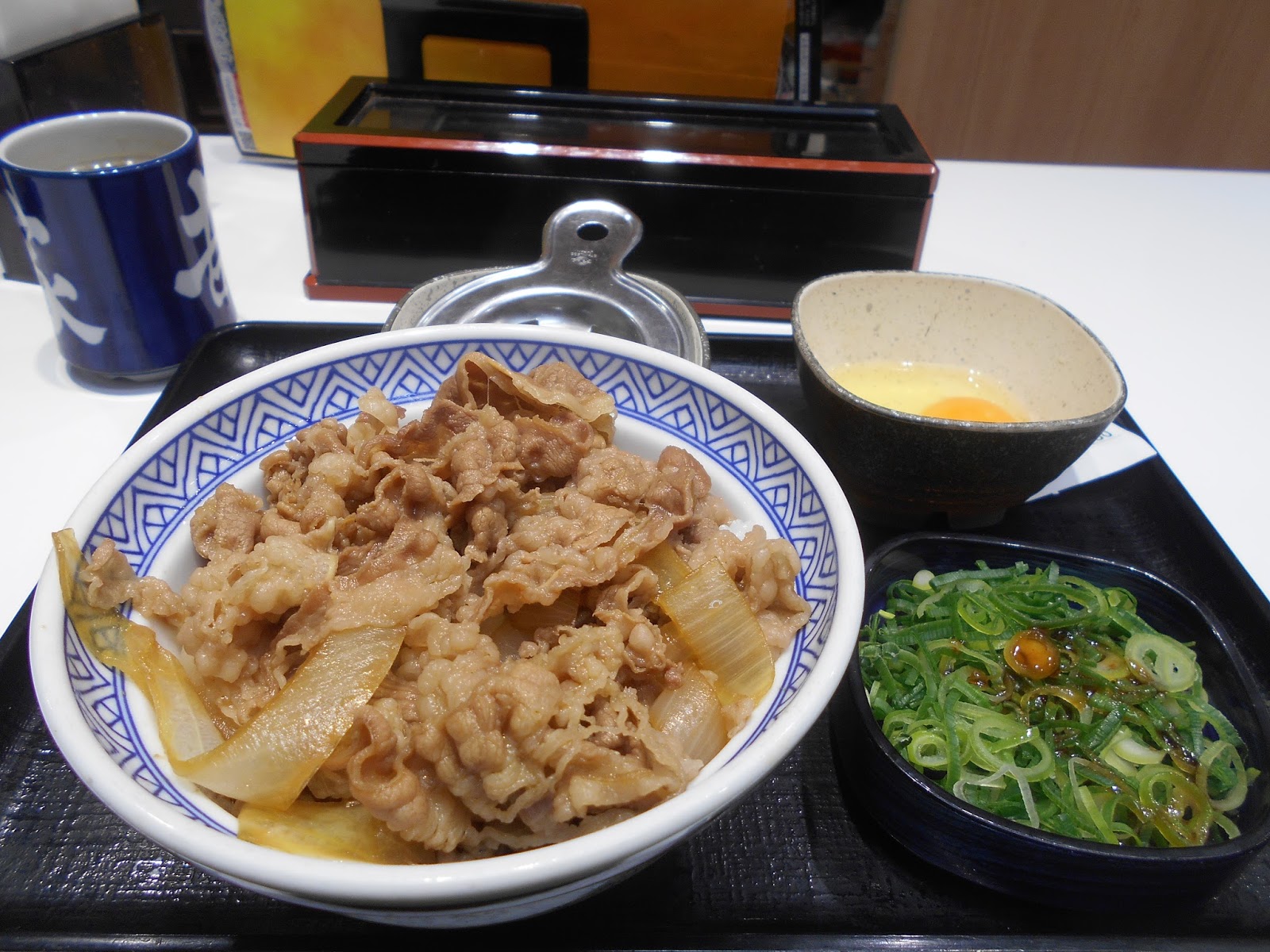
13.15      - (45 mins) JP Tower, located next to the impressive Tokyo Station, is both an office building and mall. There are a wide selection of restaurants and eateries at the basement and floors above although they may be slightly pricier than elsewhere. You can, of course, dine at Harajuku too where a Yoshinoya outlet there cost half the price here, around Y600 (SGD 7~) a meal compared to >Y900 (SGD 9~) here. 
A cheap Oishi Yoshinoya meal
In a restaurant in JP Tower

An expensively good meal!

14.00    - (30 mins) Cross the street towards the direction of Tokyo Station and then turn to your right. Look for the HATO Bus Tour sign. It is hard not to miss because they occupy a long stretch of the street and their characteristic yellow bus can be seen from afar. Book a tour ride for 2.30pm. Now, you can choose to look around the impressive Tokyo Station. The Station is majestic from the inside with a domed ceiling stretching high above. People walk across the expansive marble floor in all directions. 
The domed ceiling of Tokyo Station

Right outside Tokyo Station

Head back towards JP Tower. There is a very impressive museum called the Museum Intermediatheque on the 2nd floor. The museum consists of two levels with permanent as well as temporary galleries. Among the displays are a very wide collection of taxidermy animal collection, including rare species of mammals and sea creatures, portraits of famous college professors and a contemporary Japanese art collection. The museum is free to enter and visit.

Museum Intermediatheque:   Opening hours: 11am-6pm    I     Tel: +81 (0)3-5777-8600 
Website: http://www.intermediatheque.jp/en

Entrance to Museum Intermediatheque.

No pictures allowed, so here is a poster from outside

From outside the impressive museum

14.30    - (1 hour) Don't miss the HATO Bus Tour or you will have to wait another 30 minutes. The bus tour enables you to see the sights and sounds and the layout of Tokyo city in the space of an hour. it costs Y1800 (SGD 22~) for an adult. You get to sit on an open bus top with a tour guide who will be explaining about the famous landmark as you pass them by. You will also be provided with an electronic gadget earpiece which provides an English translation of the tour. The bus is a good experience because you get to see the famous sights which you otherwise may not have time to visit such as the Rainbow Bridge, the (overrated) Tokyo Tower, the Tokyo Ginza district (an upper class district similar to Singapore's Orchard Road) and the Kabuki-za Theatre. It may get very cold in the winter-autumn period but the Bus Tour provides heat packs and a raincoat for rainy weather.

HATO Bus Tour:    Departure times: 9:30 10:00 10:30 11:00 11:30 12:00 13:00 13:30 14:00 14:30 15:00 15:30 16:30 17:00 17:30 19:00      I     Tel: +81 03-3435-6081
Website: https://www.hatobus.co.jp/dom/feature/tomodachi/english/

Ms Pasita aboard the HATO Bus

The writer beneath the Tokyo Tower

Kabu-zi Theatre

Beneath the Rainbow Bridge arches

Thank God for the English translation

Aesthetic Japanese streets

15.30   - (1 hour) Take a short walk towards the Japanese Imperial Palace. You should be able to know the direction of the palace after the tour! ;) Personally, I have not entered the Palace because I came after the closing time (last entrance visit was at 4.30pm) but there are still many beautiful places to take pictures even from the outside. Take your time taking pictures and strolling the beautiful gardens and lakes. Do note that some days are closed so do find out when they are closed too! If they close early, as in Winter and Autumn period, it is wise to take an earlier HATO bus tour.

Imperial Palace:   Opening hours: 9am - 5pm (Last entry 4pm-4.30pm) I    Tel: +81 3-3213-1111
Website: http://www.kunaicho.go.jp/e-event/higashigyoen02.html
Outside the Imperial Palace

Near the East Entrance to the Imperial Palace

Instagram worthy

Instagram worthy bridge

A bird on the moat.

You now have a choice to either visit Yokohama, a well-known sub-district of Tokyo, or visit the Sunshine City, a new exciting destination.

Plan A - Yokohama (For the romantic thrill seeker)

16.30     - (1 hour) Take the Tozai Line from Takebashi Station about a 10 mins walk from the Palace and transfer at Nihombashi Station to the Asakusa Line. 10 stops later, you will reach Yokohama Station. 

17.30    - (2-3 hours) There are many places to visit and things to do in Yokohama City because this is the so-called entertainment city of Tokyo, something like the Sentosa of Singapore. if you come earlier, you may try the Japanese Overseas Migration Museum located just across a bridge from the train station. Admission is free and there is a Japanese guided tour around the impressive little museum which seeks to explain a different aspect of Japanese history, the history of migrations. The museum closes at 6pm. 
A Japanese Farmer's parade

At the restaurant at the Museum

There is a free petting zoo with a large collection of animals about a 30 minutes walk from the station called the Nogeyama Zoo. There you can go up close to many cute animals to take pictures or to pet them. However, it closes early at 4.30pm.  
The entrance to Nogeyama Zoo

An alternative place to visit is the famous Yokohama Cosmo World, an amusement park which is often associated with the Yokohama skyline. Even from far, just looking at the roller coaster rides provides a thrill as to what it could offer. There is no entrance fee to the amusement park but the rides are on a per ride basis from Y100 (SGD 1~) for small games in the arcade to Y700 (SGD 8~) for a ride on the 112m landmark Ferris Wheel or the massive and fast roller coaster. 


Yokohama Cosmo World at a distance
Yokohama also boasts beautiful piers, parks, bridges and walkways. A particularly memorable stroll brought me next to the river across a wooden walkway with music coming off speakers hidden along the walkway. Usually, people who go to Yokohama would also choose to simply stroll around the area, shop and nearby shops and AEON Mall or dine at fancy restaurants and bars overlooking the river. It is really a place almost tailor-made for couples.

Japanese Overseas Migration Museum:    Opening Hours: 9am - 6pm   I   Tel: +81 45-663-3257
Yokohama Cosmo World:    Operating Hours: 11am-10pm        I        Tel: +81 45-641-6591

The view along the river

Walking around Hazawa Seibu Community in Yokohama

A casual stroll through scenic villages

19.30/ 20.30     - (45 mins) After a full day of visiting these must-go places in Tokyo, you can head back to Shinjuku for dinner or to continue shopping. Of course, you may also have your dinner in Yokohama, especially so if you come here with your Special One because the atmosphere in Yokohama is very idyllic and romantic. Shinjuku, on the other hand, is for those who prefer a wider variety of food options and late night shopping convenience. As mentioned before, almost all train lines lead to Shinjuku Station.

20.15 / 21.15      - (45 mins) Late dinner. If you are a Muslim traveller, there are few Halal eateries you may find in the area around Shinjuku. One is called Bosphorus Hasan Shinjuku. You can ask for specific directions from the Tourist Information Centre and you will have to walk for about 15 mins to get to the restaurant from Shinjuku Station. The Turkish cuisine served is exquisite and delicious but also very pricey. It costs around SGD 20~ for a decent meal. 

Menu at Bosphorus Hasan Shinjuku

Another much cheaper place which I frequented was the Nasco Food Court but you will need to take the Yamanato Line and ride one station away to the Shin-Okubo Station. The food here is good and fulfilling and they serve Indian cuisines such as Briyani Rice which costs about Y800 (SGD 10~) for a full meal. The street where the restaurant lie in is actually a halal food street owned by Muslim migrants, thus you can stock up on food snacks and ingredients from the shops and kosher supermarket to last your stay here.
Nasco Food Court

Really affordable oishi meal!

A signboard outside the restaurant

A simply designed interior

Nasco Food Court:          Tel: +81 80-4086-8631

Bosphorus Hasan Shinjuku:  Opening hours: 11:30-14:30 , 17:00-23:30     I    Tel: +81 03-3354-7947

21.00/ 22.00      - (15 mins) Head back to National Olympics Memorial Youth Centre to rest.

Plan B - Sunshine City (For the nostalgic Pokémon trainers who gotta catch 'em all and the indoor thrill seekers)

16.30       - (45 mins) Exit the gardens of the Imperial Palace and head towards Takebashi Stationalong the Tozai Line. Take two stops to Lidabashi Station and transfer to Yarukucho Line. Three stops later and you will reach Higashi-Ikebukuro Station. Here is the tricky part. Sunshine City is actually a development project by one of Japan's large corporations. It encompass several buildings and a large underground network. I got lost trying to locate the Pokémon Center, only to found out the GPS intended for me to go underground. The Center is located on the top most floor of the shopping centre, Sunshine City Alpa.

Welcome to Sunshine City!


It feels almost like Akihabara

17.15       - (1 hour) After all the trouble of finding the Pokémon Center Mega Tokyo, go nuts exploring the entire outlet filled with Pokémon merchandise! All kinds of merchandise on the nostalgic icon are sold here from soft toys to trading cards to stationery sets and bags. Pikachu features the most here and there are several collector's editions a collector might want to purchase and collect. However, do note that the prices of the items here are not cheap (as is most of Tokyo) hence many visitors actually saved their pennies to have a spending spree here. The queue at the counter is long but it is really worth the wait. I bought a Bulbasaur soft toy the size of two palms for the cost of Y2000 (SGD 24~), a gachapon capsule rubber toy for Y300 (SGD 3.5~) and bath bomb with a keychain inside for Y200 (SGD 2.5~) amongst many other things. The bath bomb was the most worth it item, in my opinion. The price of soft toys also appears to follow how popular the Pokémon character are. For example, first generation Pokémon such as Charmander, Bulbasaur, Cubone and Machop were clearly priced higher than the more newer Pokémon despite how complicated the new Pokémon may look like. The soft toys are sold anywhere from Y1500-Y2500 for a palm sized version. There are several large statues of the Pokémon around the store and you can take pictures with them.

The anticipation!


Can you name them all?


I don't even know its name!

Pokémon Center Mega Tokyo:    Opening Hours: 10am - 8pm   I    Tel: +81 3-5927-9290

18.15       - (1 hour) Head to J World Tokyo an indoor theme park in Sunshine City Alpa. Prices to try all the attraction is at Y1800 (SGD 22~) after 5pm. personally I have not been here due to my limited time in Japan (I visited Sunshine City Alpa on my way back to Narita Airport ^^) but I do hear rave reviews on this place. The theme park includes rides and attractions from famous animes and manga such as One Piece, Naruto and Dragon Ball Z. They also have a themed restaurant inside with reasonably priced themed food galore from cakes to pasta. A gist of what to expect can be found in their website or in vlogs found on YouTube. 

J World Tokyo:Operating Hours: 10am - 10pm I Website: http://www.namco.co.jp/tp/j-world/en/about/

19.15      - (45 mins) You must be hungry after a long day. There are numerous restaurants and eateries located in Sunshine City Alpa, you will be spoilt for choice. Otherwise, you may also choose to dine at J World Tokyo or at the next attraction, Sky Circus.

20.00      - (1 hour 15mins) This is a place which you simply HAVE to try, Sky Circus. The admission is Y1200 (SGD 15~). However, there are attractions inside which are on an additional per ride basis. For example there is the Tokyo Bullet Flight (Y600, SGD 7~), Swing Coaster (Y400, SGD 5~) and Sky Escape (Y500, SGD 6~). The place is a sort of theme park with the theme being a fantasy world located in the clouds or the sky with dazzling usage of optical illusions, elaborate setting and intriguing attractions. Incidentally, Sky Circus is located at the 60th floor of Sunshine 60.

Sky Circus:   Operating Hour: 10am - 10pm (Last ticket: 8.50pm)   I  Tel: +81 03-3989-3457
Website: http://www.skycircus.jp/english/about/

21.15      - (30 mins) Exit Sunshine City and head back towards National Olympics Memorial Youth Centre to rest.


Thus is a two day rough guide of all the must go places if one is to visit Tokyo. There are many other places you can visit in Tokyo such as UENO ParkNHK Broadcasting Centre or the Japanese Diet(Parliament Building), but essentially, the places mentioned is a Basic Tourist guide to massive Tokyo. I hope this guide have been and may be useful and easy to follow for the traveller who simply wishes to experience Tokyo. You may wish to experience more Japanese experiences while you are in Tokyo and I really do encourage you to try them all!


Some of my to-do list in Tokyo, which I have not yet done, is to stay in a Capsule Hotel. However, for those of you who intends to experience what a Japanese onsen (public bath) feels like, you may be surprised that most public establishments such as the Youth Centre I recommended to stay in and hotels have them.
If you are planning to head to Tokyo, I wish you all the fun and adventure you can have and thank you for reading! :)